

 Are you one of those people who believe that ‘eating fat’ MAKES you ‘FAT’ and fat is completely unnecessary for the body? Well, you might just want to take a closer look at what healthy and balanced eating is all about!
A balanced diet along with regular exercise is an extremely important part of a maintaining a healthy lifestyle. A nutritious diet includes just the right amount of proteins, carbohydrates, dairy products, fruits and vegetables and one even fat. Yes, fat, but not the unhealthy type but the healthy kind!
Now, you might wonder, what’s the point of fat when it just adds calories to our weight, right?
Also known as lipids they play a very important role in our diet.
Fats are one of the three macro-nutrients, a group that also includes proteins and carbohydrates. .
Fats are concentrated forms of energy
Fats are extremely important for the improvement of overall cell functioning, brain development, protecting the organs of the body and also absorption of the different fat-soluble vitamins – A, D, E and K from food.
They provide approximately 9 calories per gram, which is almost double the amount for protein and carbohydrates at about 4 calories. They are an essential form of energy for the body, produce important hormones and even help the body to maintain body temperature.
Different Types of Fat
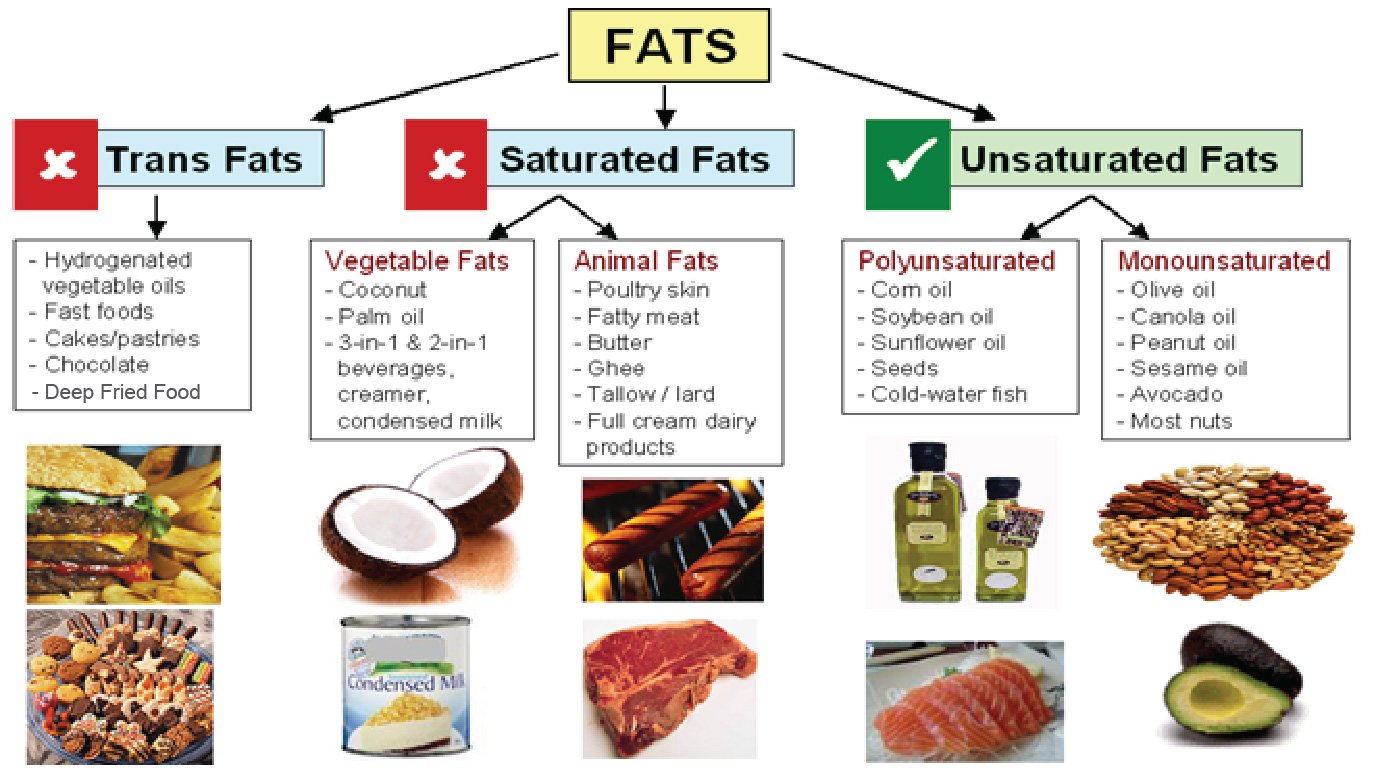
There are different types of dietary fats that can be found in the food we eat:
1) Saturated Fats: Saturated Fats: When a fatty acid’s carbon chain is complete and evenly filled (saturated) with hydrogen atoms it is known as a saturated fat. These are referred to as the BAD fats for the body and are known for raising bad cholesterol (LDL) in the body.
Bad/unhealthy fats such as saturated are usually solid and can be found in food items such as pizza, whole and reduced milk, butter, margarine, cheese, cakes, pies, cookies, Mexican fast food dishes, etc.
2) Unsaturated Fats: When the fatty acids carbon chain is not complete and evenly filled with hydrogen atoms it is known as unsaturated. These fats have a double bond somewhere in their chemical structure.
There are two different types are unsaturated fats: monounsaturated fats and polyunsaturated fats. These fats can be found in liquid for and are usually found in oils. These can be referred to as the ‘GOOD fats’ and are found in in liquid form such as liquid vegetable oil, sesame oil, peanut oil, etc.
- Monounsaturated Fats: Mono- means one unsaturated chemical bond and they can be found in liquid form (vegetable oils) at room temperature, but quickly harden. Foods such as certain cooking oils such as olive oil, canola oil and sesame oil, peanut butter, certain nuts such as peanuts and cashews, avocados, olives, sesame seeds and even healthy spreads which are labeled as ‘highly oleic’ also contain them. They can help to lower your LDL (bad) cholesterol levels.
- Polyunsaturated Fats have more than one double bond in their structure. Some of the foods containing them are seeds such as sunflower and pumpkin, cooking oils such as corn oil, soybean oil and even certain nuts such as pine nuts and walnuts. Both of these types are known to lower triglyceride levels and lower LDL cholesterol. They thus help to improve the lipid profile, increasing HDL cholesterol.
Polyunsaturated fats can be of two types:
- Omega-3 Fatty Acids: These can be found in foods from plants such as soybean oil, walnuts, flaxseed oil and canola oil. Omega 3 fatty acids have anti-inflammatory benefits, which help to prevent heart diseases. Besides providing energy, they are important for cellular membranes and nerve cells.
- Omega-6 Fatty Acids: These are found in liquid state and can be found in most vegetable oils. They can be found in corn oil, soybean oil and safflower oil. Omega-6 fatty acids are known for lowering blood cholesterol and supporting the skin. Similar to Omega-3 fatty acids, Omega-6 fatty acids provide energy and are important for cellular membranes and nerve cells.
Both of these types of fats have been linked with promoting heart health.
3) Trans Fats: Also a type of unsaturated fat, trans fats (also known as trans fatty acids and trans unsaturated fatty acids) occurs through a process known as hydrogenation.
Through this process, oil turns into a solid form (hardening process). These artificial fats can easily be found in processed foods such as cakes and biscuits, which give the product a longer shelf life. It is also known as ‘hydrogenated’ fat.
Trans fat is known to be double the trouble for your heart and is known for raising the LDL (Low-density lipoprotein) in the body. LDL is the bad cholesterol and can build up walls in the arteries making them hard and narrow. It can even lower the HDL (good) cholesterol in the body.
All of these types have different chemical structures and physical properties. They also have different affects on the cholesterol levels of the body. Each type of fat is made up of units known as fatty acids. The different dietary acids are known as saturated, monounsaturated and polyunsaturated.
Foods such as margarine, butter, whole milk, salty snacks, fried foods such as doughnuts, french fries; bread, cake products, crackers and cookies contain trans fat.
