




Are you tired and frustrated that you’re not losing much weight despite strenuous exercise routines and dietary changes? Our body has a very complex system, which involves minerals like potassium and sodium and hormones, to maintain a proper balance.
However this balance is most often disturbed and the stall in your weight loss does not necessarily mean that there is a stall in fat loss – it actually could be because of the water retention in the body.
Every body has a different way that their body reacts to diet changes and to exercise routines. This is perhaps why skinny people who are trying to build lean mass and pack on size instead loses weight whereas other people who have exercised twice as much and ate pretty healthy have actually gained weight!
Water retention (also known as fluid retention or hydrops, hydropsy, edema) is when extra water hangs around the tissue, joints and body cavities between your cells. This is the way our body copes.
It is perhaps the most frustrating to deal with, especially for people who are working really hard at their workouts and diets. Carbohydrates and salt are the main two reasons for water retention. It is in fact one of the main reasons why you even look “fatter” despite the intense dieting and workouts that you do!
Some other reasons why water retention occurs include fluctuating sodium levels, intense exercise and even your body’s key electrolytes being out of the smack.
Besides this, chronically elevated levels of cortisol are also causes of water retention. Its hard to pinpoint how much of water retention cortisol can actually cause as it can also cause fat gain, but cortisol weight is a mixture of water and fat.
There are different reasons for causing a rise in cortisol levels- the main ones being sleep deprivation, psychological stress and the very activities that people turn to for weight loss- strenuous exercise and caloric restriction!
Water retention could be caused because of many other reasons such as standing or sitting for long periods of time, fluctuating ( high or low) blood pressure, prescription medications, infection of your blood vessels, liver, kidney, thyroid or heart disease, hormonal changes during pregnancy and even during mentruation and head injury,
So, the next logical question would be how to avoid this from happening or how to flush all that water weight out of your system!
(This advice is strictly for those who are absolutely sure that they have been in a reduced caloric state 100% but the weight is not changing (in past weeks) despite the workout and diet.)
This advice can also help people to want to stop looking ‘bloated’ and just look a lot better. So, if you are pumped full of water weight, you will most certainly look bigger.
Now the question is, what can you do about it?
Steps to NO AVOID WATER RETENTION
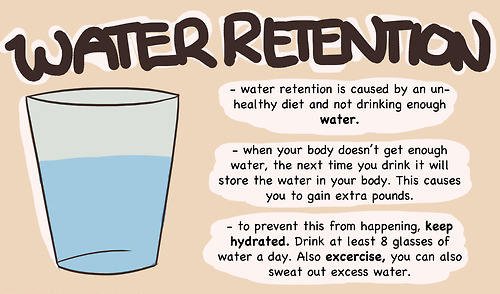
- Drink MORE water – It’s as simple as that! It is the easiest way to get your body in a good rhythm where it does not store any water. This actually helps the body to release more water.
When you don’t drink enough water, your body desperately holds onto whatever little there is to prevent any dehydration. This is in fact a survival tactic that our body uses to prevent dehydration.
If your body does not get enough water and you are exercising and sweating on a regular basis your body is only getting rid of your body’s electrolyte system and natural hydration.
When your body is fully hydrated and your body has enough water, there will be no need to hold onto any excess water. There are times when you are not fully hydrated.
Your body holds onto whatever little amount of water there is under the skin (subcutaneous fluid) for emergency. This fluid; is created by water molecules that bind onto sodium ions. So in short, water retention is caused by excess sodium.
To put it in simple terms, the best way to reduce water retention is to eliminate sodium from the bad food sources that automatically make you look puffy and give you a bloated image. Some of these include: processed foods, fried foods, bread, canned vegetables, ice cream, candy and potato chips.
‘Water weight’ is however different from fat!
Although you gain weight, water weight is not linked to the number of calories consumed or even expelled. Fat weight is linked to an imbalance of energy.
So to make it simple it is a combination of reducing your sodium intake and increasing your water intake. The next step for you is to ensure that you lift weights (include weights) a couple of times a week. This means that your muscle weight also includes water weight and your body will less likely store it between your skin and muscles.
Another important way to ensure that your body is not storing excess water is to increase your intake of fruits and vegetables. These food items are all natural high fiber food.
Best foods for water retention:
- Eat Bloat-fighting foods such as: All of those food items that are high in water content such as leafy greens, tomato, onions, carrots, peppers, cucumber, watermelon, grapefruit and celery can help to flush out excess sodium in the body are good food sources to help prevent water retention. The flavonoids that are found in vegetables and in fruits can even alleviate water retention.
- Magnesium foods are absolutely essential. Green vegetables such as spinach and some legumes like beans and peas. These food substances can help to get rid of water retention.
- Potassium rich foods vegetables such as broccoli, potatoes, lima beans, sweet potatoes, peas and potassium rich fruits such as kiwi, prunes, bananas, apricots, cantaloupe and citrus fruit.
- Take electrolyte
- Avoid stress (it actually leads to weight gain!)
- Nuts & whole grains: They are a good source of vitamin b6 and are great munch to have. It’s important to choose whole grains that are low in sodium and avoid salted nuts.

